Houston service overview
AC Repair service starts with the installed condition
An AC repair visit should identify the operating condition before naming a part. Temperature split, airflow, electrical readings, refrigerant-side evidence, drainage, controls, and equipment history can point to very different scopes even when two homes report the same symptom.
The request should connect the system behavior with the building and the people who use it. Note when the condition appears, which rooms or zones are affected, thermostat settings, equipment location, maintenance or repair history, and any safe observations of water, ice, sound, odor, or error messages. These details improve routing, but they do not replace qualified field testing.
A reliable visit distinguishes an immediate safety or property-protection need from the work required to diagnose performance. It also records access limitations. Locked roofs, extreme attic conditions, occupied units, concealed ducts, weather, or equipment that cannot operate can change which conclusions are available during the first visit.
01 / DIAGNOSIS
What Houston ac repair service checks
The exact sequence depends on the equipment and symptom. These checkpoints define the intended investigation without claiming that every test is required for every system.
Confirm the thermostat call, mode, setpoint, and control response
Measure return and supply conditions instead of judging cooling by touch
Inspect filter, blower, coil, accessible duct transitions, and condensate path
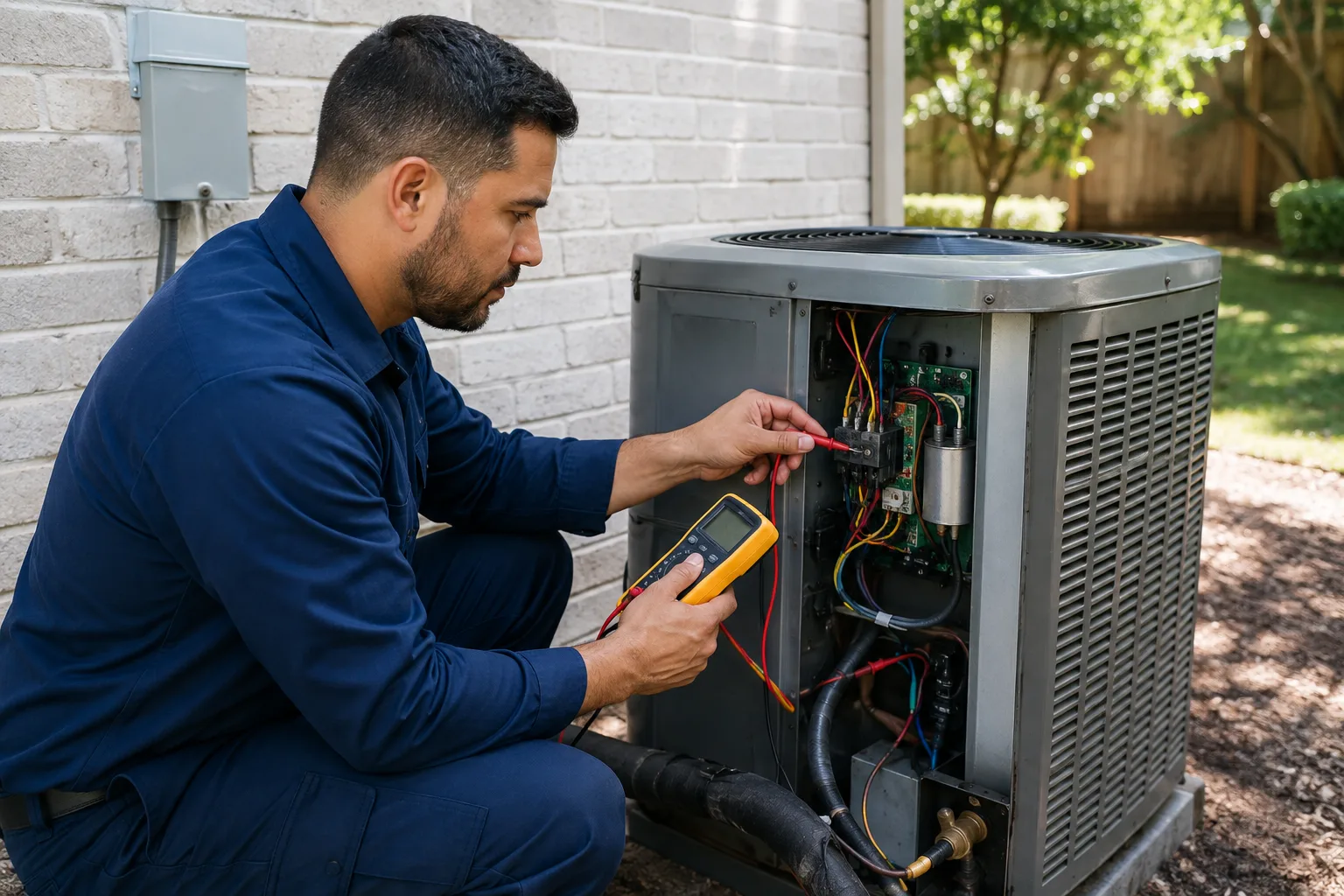
Evaluate outdoor-unit startup, electrical condition, coil cleanliness, and operating sound
Measurements only help when interpreted with operating mode, outdoor and indoor conditions, equipment documentation, and the original complaint. A number collected after an automatic safety has stopped a component may describe the consequence rather than the cause. The diagnostic record should explain that relationship in plain language.
02 / SCOPE
How the ac repair scope is defined
A scope should identify the verified condition, the work intended to change it, access assumptions, included parts or materials, exclusions, and how completion will be checked. This lets a customer compare outcomes rather than comparing two totals that may represent different work.
- 01
Document the verified fault and any related condition that changes reliability
- 02
Separate immediate repair work from optional maintenance or system improvements
- 03
Identify parts, access, refrigerant, and commissioning steps required for the proposed work
- 04
Retest the original complaint after approved repair
Price, schedule, part availability, warranty, permits, and response commitments must be confirmed for the actual job. This page intentionally does not use an unverified coupon, flat price, guaranteed arrival window, or universal performance claim to manufacture urgency.
03 / DECISIONS
Repair and replacement decisions for ac repair
The purpose of diagnosis is not to force every request toward one predetermined sale. The useful outcome is a defensible choice that reflects verified condition, risk, compatibility, comfort, property operations, and the owner’s time horizon.
A failed control may be repairable without changing the full system
A recurring refrigerant loss requires leak evidence—not repeated topping off as a default plan
Airflow or duct restrictions can imitate equipment failure and must be considered
Age alone does not decide replacement; condition, repair risk, comfort performance, and future plans matter
When replacement is considered, ask whether the comparison covers load, humidity control, indoor and outdoor matching, ducts, controls, drainage, electrical work, equipment access, commissioning, permits where applicable, and written warranty terms. When repair is considered, ask what the work restores and what conditions remain unchanged.
04 / HOUSTON CONTEXT
Houston conditions that affect ac repair
Houston heat and humidity create long cooling cycles and high latent-load demands. Diagnosis should consider wet coils, condensate management, attic duct exposure, outdoor-coil loading, and whether the system maintains comfort without excessive cycling.
Neighborhood and climate context helps plan the visit; it cannot establish equipment condition. Exact address, ZIP code, property access, and the installed system remain necessary before coverage, schedule, or scope is confirmed.
05 / LIMITS
What this service page does not promise
- No refrigerant quantity or component failure is assumed before testing
- Roof, attic, tenant, or locked-area access can change the visit scope
- Electrical hazards, standing water, or damaged equipment may require shutdown before deeper testing
06 / QUESTIONS
AC Repair questions from Houston property owners
Can you quote ac repair from a phone description?+
A symptom helps route the request, but a defensible scope usually requires equipment identification, access review, measurements, and confirmation of the failed condition. The site does not promise a fixed repair before that work is complete.
Do you serve every Houston ZIP code?+
Coverage and scheduling depend on the exact address, travel window, property access, and service capacity. Send the ZIP code first so availability can be confirmed without implying a local office in every neighborhood.
Will I receive options before work begins?+
The intended workflow is to separate findings from recommendations, describe what each option changes, and obtain approval for the defined scope. Prices, warranties, and availability must be confirmed for the specific job.
What information should I provide?+
Share the property type, equipment location, thermostat behavior, when the issue began, any unusual sound or odor, recent maintenance, and safe photos of the equipment label if available. Never open energized panels to take a photo.